Leak Detection Thermal Camera Explained: A UK Buyer's Guide
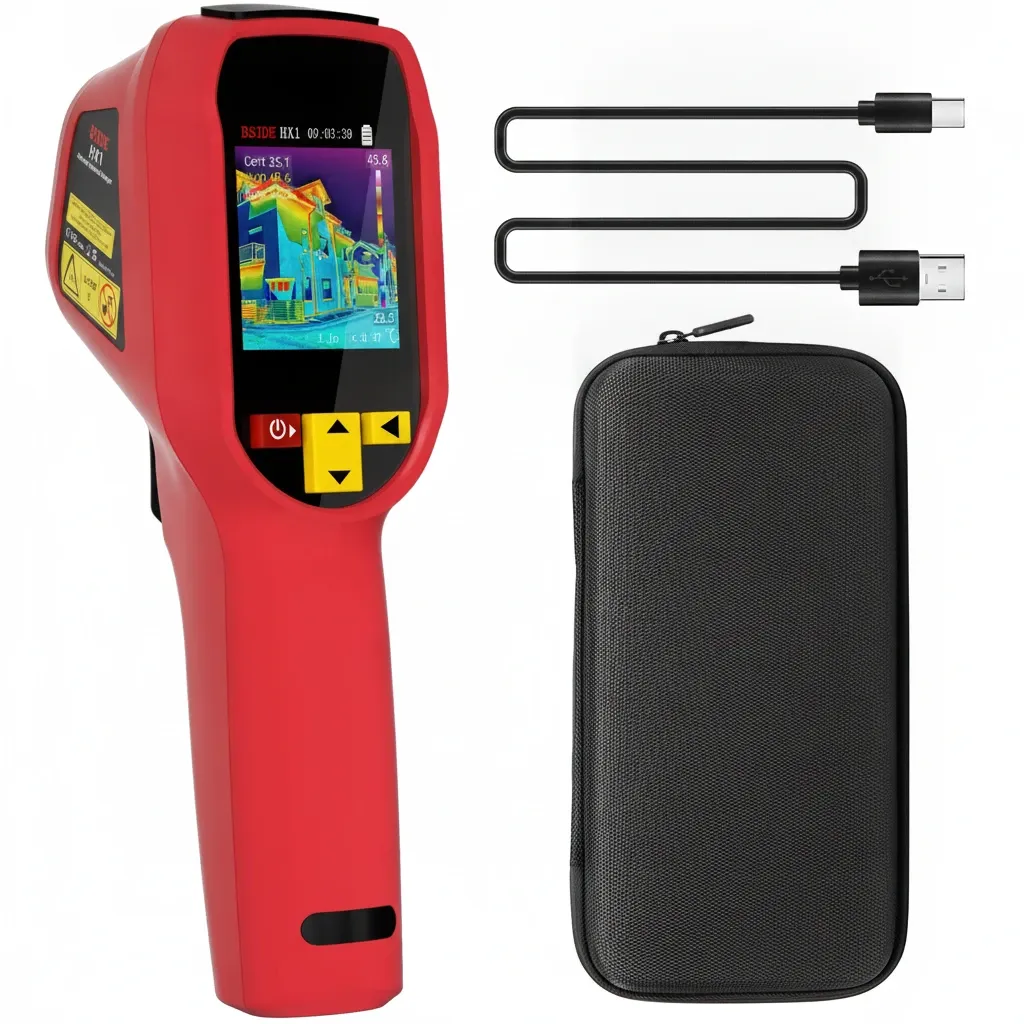
Water is the silent destroyer of UK properties. Long before a damp patch becomes visible on your plasterboard or water begins pooling on your flooring, a hidden leak can compromise structural integrity, destroy insulation, and encourage hazardous mould growth. Traditional plumbing diagnostics often rely on destructive methods—lifting floorboards, cutting into drywall, and educated guesswork. Today, a leak detection thermal camera eliminates this costly disruption, allowing professionals and proactive homeowners to pinpoint moisture with pinpoint accuracy.
By detecting minute temperature differentials on surfaces, these devices reveal the exact location of escaping water, underfloor heating faults, and roof ingress. Whether you are a surveyor navigating the complexities of Victorian housing stock or a facility manager maintaining modern commercial premises, understanding how to deploy thermal imaging for moisture detection is no longer optional; it is an industry standard.
Key Takeaways
- A leak detection thermal camera does not "see through" walls; it detects surface temperature changes caused by moisture (evaporative cooling) or heated water.
- According to the Association of British Insurers (ABI), escape of water claims cost UK insurers roughly £2.5 million every single day, making early detection critical.
- For accurate leak detection, a minimum thermal resolution of 240x240 and high thermal sensitivity (NETD) are essential to spot subtle moisture patterns.
- Handheld thermal imagers provide the durability, battery life, and ergonomic design required for rigorous UK property inspections.
The Science: How a Leak Detection Thermal Camera Works
To use this technology effectively, one must understand the fundamental physics at play. A thermal camera detects infrared radiation (heat) rather than visible light. When water escapes from a pipe, it interacts with the surrounding building materials in two distinct ways that a thermal sensor can capture.
Firstly, if the leak originates from a central heating system, hot water pipe, or combi-boiler network, the water will heat the surrounding masonry, wood, or plaster. The camera will display this as a distinct, bright "hot spot" radiating outward from the source.
Secondly, and more commonly with cold water pipes or roof ingress, the camera relies on the principle of evaporative cooling. As moisture dampens a surface and begins to evaporate, it draws heat away from that specific area. A high-quality leak detection thermal camera will register this damp patch as an irregular "cold spot" compared to the ambient temperature of the dry wall. For a deeper dive into the physics of infrared technology, read our buyer's guide to infrared thermal cameras.
Why UK Properties Demand Thermal Leak Detection
The UK presents a unique set of challenges for property maintenance. We have the oldest housing stock in Europe, with millions of homes built before 1919 featuring solid walls, suspended timber floors, and ageing microbore plumbing. Couple this with our famously wet climate, and the risk of water ingress and internal leaks is exceptionally high.
Traditional leak detection in the UK often involves "trace and access" work—a disruptive process where plumbers must dismantle parts of the property just to locate the fault. A leak detection thermal camera completely transforms this workflow. By scanning a ceiling or floor screed, a user can trace the exact path of a pipe and identify the precise point of failure without lifting a single floorboard or damaging expensive tiling.
"Escape of water is one of the most common and expensive types of domestic property damage claims in the UK. Early intervention using non-destructive thermal imaging can save thousands of pounds in secondary damage to joists, plaster, and electrical systems."
Key Features of a Professional Leak Detection Thermal Camera
Not all thermal imagers are created equal. While cheap, low-resolution smartphone attachments might suffice for finding a severe draught, pinpointing a slow micro-leak behind a cavity wall requires professional-grade specifications. If you are investing in a leak detection thermal camera, these are the critical metrics to evaluate.
1. Thermal Resolution (The 240x240 Standard)
Thermal resolution dictates the number of individual temperature data points (pixels) the sensor captures. A low-resolution camera (e.g., 80x60) will produce a blurry, pixelated image where the edges of a moisture patch become indistinguishable from the background. For professional diagnostics, a resolution of 240x240 is the benchmark. This provides 57,600 individual temperature measurement points, delivering the crisp, detailed imagery needed to trace a leak back to its exact origin. To understand why dedicated sensors outperform consumer gadgets, explore our handheld thermal imager breakdown.
2. Thermal Sensitivity (NETD)
Noise Equivalent Temperature Difference (NETD) measures the camera's ability to distinguish between tiny differences in thermal radiation. Measured in milliKelvins (mK), a lower number is better. When searching for cold water leaks or subtle dampness, the temperature difference between the damp spot and the dry wall might be less than 1°C. A high-sensitivity camera (typically <40mK or <50mK) will easily highlight these minute variations, whereas a cheaper model will miss them entirely.
3. Field of View and Focus
When scanning a large UK living room for underfloor heating leaks, a wide Field of View (FOV) allows you to assess the entire floor quickly. Conversely, when inspecting cramped spaces like airing cupboards or under kitchen plinths, the camera must have a suitable focal distance to capture accurate readings in close quarters.
Common Applications for Thermal Moisture Detection
The versatility of a leak detection thermal camera makes it an indispensable tool across multiple trades and domestic scenarios. Here are the most common applications in the UK market:
Underfloor Heating Diagnostics
Underfloor heating (UFH) has surged in popularity across British homes, particularly in new builds and kitchen extensions. However, when a UFH pipe leaks beneath a concrete screed or luxury vinyl tile, finding it manually is an absolute nightmare. A thermal camera maps the entire heating matrix perfectly. A leak will manifest as a large, amorphous "bloom" of heat, disrupting the neat, parallel lines of the heating pipes.
Roof and Ceiling Ingress
Flat roofs—common on UK garages and extensions—are notorious for failing. Water can penetrate the membrane and travel several metres along joists before showing as a damp patch on the ceiling below. A thermal survey, conducted ideally after sunset when the roof begins to cool, will reveal trapped moisture as it retains heat longer than the dry insulation surrounding it.
Tracing Plumbing Routes
Before drilling into walls to install cabinets or televisions, tradespeople use thermal cameras to map out hidden pipework. By turning on the hot tap or central heating, the exact location of the pipes glows brightly on the screen, ensuring safe, strike-free drilling.
For a broader look at how this technology is revolutionising property maintenance, consult the ultimate guide to thermal imager in the UK.
Best Practices: How to Find Hidden Leaks Like a Pro
Owning a high-quality leak detection thermal camera is only half the equation; knowing how to manipulate the environment to enhance thermal contrast (Delta T) is what separates the experts from the amateurs.
- Create a Temperature Delta: Thermal cameras thrive on contrast. If you suspect a cold water leak, turn up the central heating in the room for an hour before the inspection. The warm ambient air will heat the dry walls, making the evaporative cooling effect of the damp patch stand out sharply.
- Watch Out for Reflections: Shiny surfaces like bathroom tiles, mirrors, and stainless steel appliances reflect thermal energy just like they reflect visible light. Ensure you are reading the temperature of the surface, not the reflection of your own body heat. Move to a slight angle to verify.
- Combine with Moisture Meters: A leak detection thermal camera shows you *where* the temperature anomaly is, but it is best practice to verify the presence of actual water using a pinless moisture meter. This two-step verification is the gold standard for UK surveyors.
- Consider the Weather: When looking for external building leaks or missing cavity wall insulation, conduct surveys early in the morning or late in the evening. Direct sunlight on brickwork (solar loading) can mask the thermal signatures of internal dampness.
ThermCam: The Professional Choice for UK Diagnostics
When dealing with water damage, precision is paramount. At ThermCam, our mission is to help you See the Invisible with a Precision Thermal Imaging Camera. We understand the specific demands of UK tradespeople and proactive property owners, which is why our flagship device is engineered for maximum diagnostic accuracy.
Featuring a professional-grade 240x240 thermal sensor, the ThermCam handheld thermal imager delivers the high-resolution clarity required for precision home inspections, complex leak detection, and electrical diagnostics. Designed to withstand the rigours of a British building site, it offers an ergonomic grip, long-lasting battery life, and the thermal sensitivity necessary to spot the subtle evaporative cooling of a slow micro-leak behind plasterboard. Stop guessing and start seeing.
Frequently Asked Questions (FAQ)
Can a leak detection thermal camera see through walls?
No, thermal cameras cannot see through solid objects like brick, plasterboard, or wood. Instead, they detect the surface temperature of the wall. When a pipe leaks behind a wall, the moisture either heats or cools the surface of the plasterboard, and it is this surface temperature change that the camera detects.
How much temperature difference is required to spot a leak?
With a professional-grade camera like the ThermCam, you need very little difference. High-quality sensors with good thermal sensitivity (NETD) can detect temperature differences of less than 0.05°C. However, for a clear, easily identifiable image, creating a temperature difference (Delta T) of 1°C to 2°C in the room is ideal.
Is a thermal camera better than a moisture meter?
They serve different but complementary purposes. A leak detection thermal camera is a rapid scanning tool that allows you to inspect an entire room in seconds to find anomalies. A moisture meter is a point-measurement tool used to physically confirm the presence of water at the specific spot the thermal camera highlighted. Professionals use them together.
Will thermal imaging work on a cold water leak?
Yes. While hot water leaks are incredibly bright and easy to spot, cold water leaks are found via evaporative cooling. As the leaked water dampens the building material and begins to evaporate, it lowers the surface temperature, which the thermal camera displays as a distinct dark/cold patch. For more details on varying temperature detection, refer back to the ultimate guide to thermal imager in the UK.
Stop Guessing. Start Seeing.
Equip yourself with the professional-grade 240x240 handheld thermal imager trusted by UK professionals for precision leak detection.
Discover the ThermCam TodayReady to upgrade your diagnostics with ThermCam?
Shop Now — £228.82